



Laparoscopic Hernia Repair: A Faster Recovery, Less Pain, and Better Results
Hernias are a common condition that occur when an organ or tissue pushes through a weakened area of the abdominal wall. While they may initially be painless, hernias often cause discomfort and can worsen over time if left untreated.
Fortunately, advancements in surgical techniques have led to the development of Laparoscopic Hernia Repair, a minimally invasive procedure that offers faster recovery, less pain, and better cosmetic results compared to traditional open surgery.
Understanding Hernias
A hernia develops when internal tissue or an organ pushes through a weak spot in the surrounding muscle wall. This weakness may be present from birth or develop later due to aging, strain, obesity, pregnancy, chronic coughing, or previous surgeries.
Common types of hernias include:
- Inguinal Hernia: The most common type, occurring in the groin area.
- Femoral Hernia: Develops lower in the groin and is more common in women.
- Umbilical Hernia: Occurs near the belly button and is often seen in infants and adults.
- Hiatal Hernia: Develops when part of the stomach pushes through the diaphragm into the chest cavity.
Why Choose Laparoscopic Hernia Repair?
Traditional hernia repair requires a larger incision to access and repair the hernia. While effective, open surgery often results in more pain, a longer hospital stay, and a slower recovery.
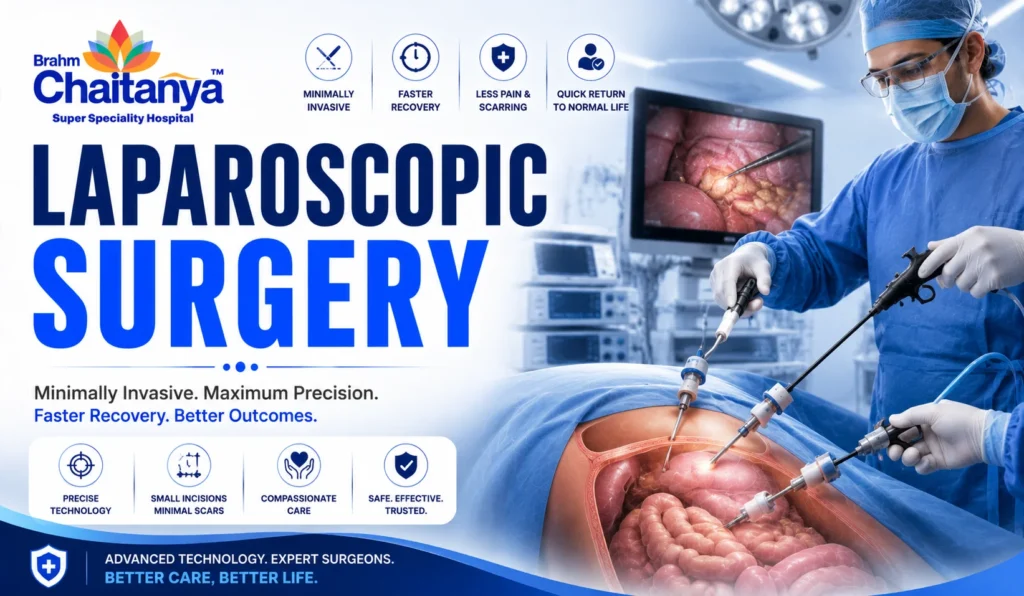
Laparoscopic surgery, also known as keyhole surgery, uses small incisions and advanced instruments to repair the hernia with minimal disruption to surrounding tissues.
How Does Laparoscopic Hernia Surgery Work?
Small Incisions
The surgeon creates three or four tiny incisions instead of one large cut.
Advanced Visualization
A laparoscope, which is a thin tube equipped with a high-definition camera, is inserted through one incision. The camera projects magnified images onto a monitor, allowing the surgeon to clearly view the surgical area.
Precise Hernia Repair
Specialized surgical instruments are inserted through the remaining incisions. The surgeon repairs the hernia and usually places a surgical mesh to strengthen the weakened abdominal wall and reduce the risk of recurrence.
Benefits of Laparoscopic Hernia Repair
Laparoscopic hernia surgery offers numerous advantages and has become the preferred treatment option for many patients.
Reduced Pain
Smaller incisions cause less tissue damage, resulting in significantly less post-operative pain.
Faster Recovery
Patients typically recover more quickly and can return to normal daily activities sooner than with open surgery.
Minimal Scarring
Because only small incisions are used, visible scarring is minimal and cosmetically more appealing.
Lower Risk of Infection
Smaller surgical wounds reduce the risk of infection and wound-related complications.
Less Blood Loss
Laparoscopic procedures generally involve less blood loss compared to traditional surgery.
Shorter Hospital Stay
Many patients are discharged within 24 hours, and some may even return home on the same day.
Recovery After Laparoscopic Hernia Repair
Although recovery is faster than open surgery, proper post-operative care remains important.
Pain Management
Mild discomfort is normal after surgery and can usually be managed with prescribed medications.
Activity Restrictions
Heavy lifting and strenuous activities should be avoided during the initial healing period. Your surgeon will guide you on when to gradually resume normal activities.
Dietary Recommendations
A healthy, fiber-rich diet may be recommended to prevent constipation and reduce strain on the surgical site.
Follow-Up Appointments
Regular follow-up visits allow your surgeon to monitor healing and ensure a smooth recovery.
Who is a Suitable Candidate for Laparoscopic Hernia Repair?
Laparoscopic hernia repair is a safe and effective option for most patients. However, suitability depends on several factors, including:
- Type and size of the hernia
- Location of the hernia
- Previous abdominal surgeries
- Overall health condition
- Medical history
Your surgeon will evaluate your condition and recommend the most appropriate treatment approach.
When Should You Seek Treatment?
You should consult a hernia specialist if you experience:
- A visible bulge in the abdomen or groin
- Pain or discomfort during lifting or physical activity
- Burning or aching sensations around the bulge
- Increasing swelling or tenderness
- Nausea, vomiting, or severe pain
Early diagnosis and treatment can prevent complications and improve outcomes.
Conclusion
Laparoscopic hernia repair represents a major advancement in modern surgical care. Its minimally invasive approach offers less pain, faster recovery, reduced scarring, and excellent long-term results.
If you are experiencing symptoms of a hernia, consult Dr. Deepa Kulkarni (General Surgeon, Laparoscopic Surgeon, Hernia Surgeon & Breast Specialist) for an accurate diagnosis and personalized treatment plan.
Remember, early diagnosis and timely treatment are essential for preventing complications and ensuring a successful recovery.