



Understanding Hernias: Types, Causes, Symptoms & Treatment Options
A hernia is a common medical condition that affects millions of people worldwide. While some hernias may cause little discomfort initially, they can worsen over time and lead to complications if left untreated.
Understanding the different types of hernias, their causes, symptoms, and available treatment options can help you seek timely medical care and prevent future complications.
What is a Hernia?
Imagine your abdomen as a protective muscular wall that supports your internal organs. A hernia occurs when a weakness or tear develops in this muscle wall, allowing tissue or an organ to push through and create a visible bulge.
This bulge may be painless at first, but it can gradually become uncomfortable and increase in size over time.
What Causes a Hernia?
The development of a hernia is usually caused by a combination of muscle weakness and increased pressure on the abdominal wall.
Muscle Weakness
Muscle weakness may be:
- Present from birth (congenital)
- Caused by aging
- Develop due to previous surgeries
- Associated with certain medical conditions
Increased Abdominal Pressure
Several factors can increase pressure inside the abdomen and contribute to hernia formation:
- Heavy lifting and strenuous physical activities
- Weightlifting without proper technique
- Chronic coughing
- Chronic constipation and straining during bowel movements
- Pregnancy
- Obesity and excess body weight
Common Types of Hernias
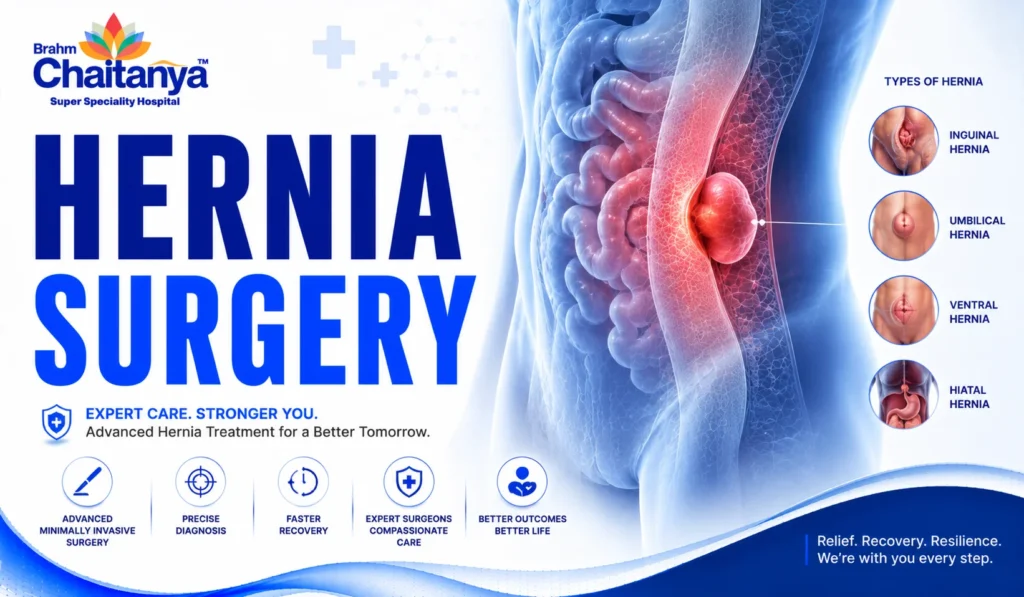
1. Inguinal Hernia
Inguinal hernia is the most common type of hernia, accounting for nearly 75% of all cases. It develops in the groin area when a portion of the intestine or abdominal tissue protrudes through a weak spot in the lower abdominal wall.
It is significantly more common in men.
2. Femoral Hernia
Femoral hernias occur just below the groin within the femoral canal. They are less common than inguinal hernias but occur more frequently in women.
Because of their location, they are sometimes mistaken for inguinal hernias.
3. Hiatal Hernia
A hiatal hernia develops when part of the stomach pushes upward through the diaphragm into the chest cavity.
Common symptoms include:
- Heartburn
- Acid reflux
- Chest discomfort
- Difficulty swallowing
4. Umbilical Hernia
Umbilical hernias develop near the belly button. They are commonly seen in infants and often resolve naturally during early childhood.
Adults may also develop umbilical hernias due to obesity, pregnancy, or increased abdominal pressure.
5. Incisional Hernia
An incisional hernia occurs at the site of a previous abdominal surgery. Weakness in the surgical incision allows tissue to protrude through the abdominal wall.
6. Ventral Hernia
Ventral hernia is a broad term used for hernias occurring in the front abdominal wall, excluding the groin and belly button regions.
They often develop due to weakened muscles, obesity, or previous surgical procedures.
Signs and Symptoms of a Hernia
The symptoms of a hernia vary depending on its type and severity. Common signs include:
- A visible bulge in the abdomen or groin
- A bulge that becomes larger during coughing, lifting, or straining
- Pain or discomfort around the bulge
- A feeling of heaviness or pressure in the abdomen
- Burning or aching sensations
- Nausea or vomiting in severe cases
If you notice any of these symptoms, it is important to seek medical evaluation promptly.
How Are Hernias Treated?
The treatment approach depends on the size, location, and severity of the hernia.
Observation
Small, painless hernias may only require regular monitoring if they are not causing symptoms or complications.
Surgical Repair
Surgery is the most common and effective treatment for symptomatic hernias.
During surgery, the protruding tissue is returned to its proper position, and the weakened area of the abdominal wall is repaired.
Open Hernia Surgery
Traditional surgery involving a larger incision to repair the hernia.
Laparoscopic Hernia Surgery
A minimally invasive technique using small incisions, a camera, and specialized instruments. This approach generally offers:
- Less pain
- Smaller scars
- Faster recovery
- Shorter hospital stay
- Lower risk of complications
Can Hernias Be Prevented?
While not all hernias can be prevented, certain lifestyle habits can significantly reduce your risk.
Maintain a Healthy Weight
Excess body weight places additional pressure on the abdominal wall.
Eat a High-Fiber Diet
A fiber-rich diet helps prevent constipation and reduces straining during bowel movements.
Use Proper Lifting Techniques
Always lift heavy objects using your legs rather than your back or abdominal muscles.
Strengthen Core Muscles
Regular exercise can help improve abdominal strength and support.
Treat Chronic Coughing
Persistent coughing can increase abdominal pressure and contribute to hernia formation.
Avoid Excessive Straining
Seek treatment for constipation and other conditions that require repeated straining.
When Should You See a Doctor?
You should seek medical attention if you experience:
- A new or enlarging bulge in the abdomen or groin
- Persistent pain or discomfort
- Nausea and vomiting
- Sudden severe pain
- Redness or tenderness around the bulge
Early diagnosis and treatment can help prevent complications and improve outcomes.
Conclusion
Hernias are common but highly treatable conditions. Understanding the different types of hernias, their causes, symptoms, and treatment options can help you take proactive steps toward better health.
If you experience any symptoms suggestive of a hernia, consult Dr. Deepa Kulkarni (General Surgeon, Laparoscopic Surgeon, Hernia Surgeon & Breast Specialist) for an accurate diagnosis and personalized treatment plan.
Timely treatment can prevent complications and help you return to a healthy, active lifestyle.